By: Reetta Nätkin
Suomennos: Kohti eturauhassyövän hoitoresistenssin ymmärtämistä
Prostate cancer is the most common cancer among men in Western countries. It is often diagnosed as localized disease later in life and many times it does not affect the patients’ life spans. However, a fraction of patients are diagnosed with advanced prostate cancer which still remains incurable. As a result, prostate cancer is the second leading cause of cancer death among men in Western countries.
Prostate cancer progression is androgen-dependent. Thus, the cornerstone of treatment of advanced prostate cancer is androgen deprivation therapy which blocks testosterone production in the body and lowers testosterone levels. After a good initial response, eventually the prostate cancer cells overcome the treatment and the cancer recurs. This phase of cancer progression is called castration resistant prostate cancer. Prostate cancer can be further treated with androgen receptor (AR) signaling inhibitors. There are first-generation antiandrogens, such as bicalutamide, that bind and inhibit the androgen receptor and second-generation antiandrogens, such as enzalutamide, that inhibit both androgen receptor and androgen receptor signaling. Nevertheless, prostate cancer cells eventually overcome these drugs as well. Other types of drugs or treatments, such as cytotoxic drugs, statins and bipolar androgen therapy, may be used to treat the prostate cancer or re-sensitize the cells to antiandrogens.

Androgen receptor plays a big role in the progression of prostate cancer and it is able to remain active in castration resistant prostate cancer. There are several known mechanisms, such as AR amplification, AR mutations and AR splice variants, that allow AR to stay active despite androgen deprivation and antiandrogen treatments. Androgen receptor, however, does not act in a void. There are multiple other processes going on in prostate cancer cells during the progression and development of treatment resistance. These processes are not yet fully elucidated. Better understanding of these processes could open new treatment avenues and allow more efficient utilization of current treatment options.
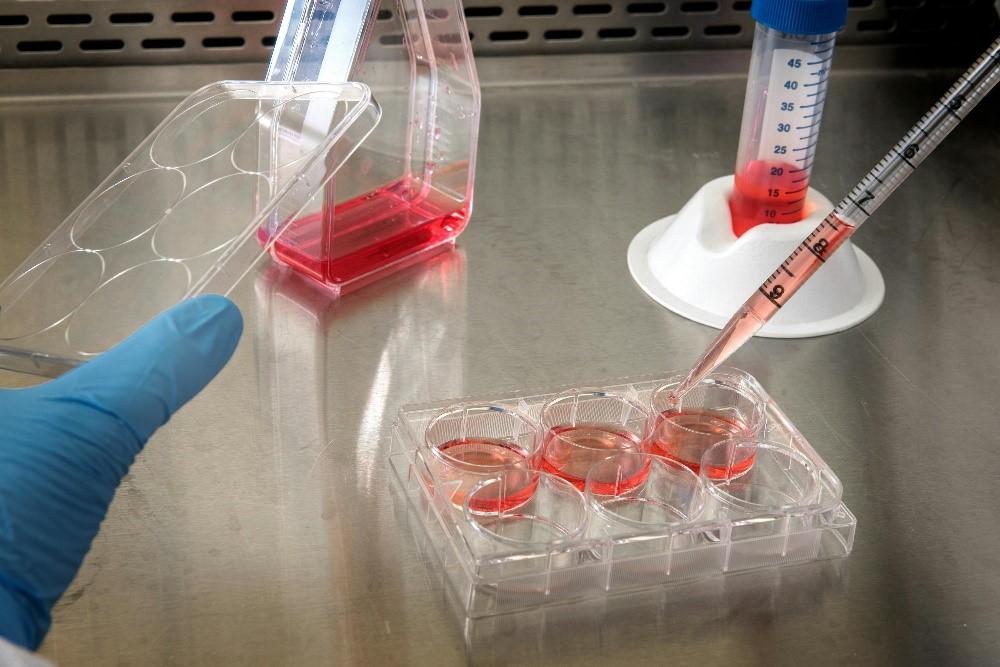
We are not able to conduct studies with certain study designs in their “authentic” environment. For that we need models, such as cell line models. For example, cell line models allow us to measure time points during treatments which would not be possible with traditional patient samples. Teemu Murtola and his research group have developed cell line models which have been cultured long-term in low testosterone levels or in the presence of antiandrogens until they have reached the growth level of the original androgen-dependent cell line. Thus, these models mimic the development of castration resistance and antiandrogen resistance in the most natural way possible. To measure the changes and processes happening during the development of this treatment resistance, we have used RNA-sequencing which allows us to see changes in gene expression levels and pathways.
First, we were interested in the genes that initially changed their expression when the cells were exposed to low levels of testosterone, but which then restored their expression after castration resistance developed. We termed these genes as adaptive genes and hypothesized that these genes are important for the proliferation of the cancer cells and thus their expression needs to be restored for cancer progression. Another set of genes we were interested in were the genes that did not change their expression during initial exposure to low testosterone but then did change when the cells resilient to low testosterone were exposed to high testosterone levels. In other words, these genes gained AR association. From both groups, we found several genes related to hormone and lipid metabolism, immune response and migration, and to the likelihood of patient survival. Thus, these genes might have clinical significance as biomarkers or therapeutic targets in the future.
Next, we were interested in the difference in changes between two cell lines with different treatment schedules of antiandrogens. We compared a cell line that had acquired resistance to enzalutamide directly with a cell line that had acquired resistance first to bicalutamide and then to enzalutamide. For these cell lines, we did a side-by-side comparison of the changes that occurred during and after the development of resistance. The results indicated that there are alternative processes that drive proliferation and migration in these two treatment lines. There were also difference in androgen signaling when the cell lines were compared side-by-side.
The goal is to treat prostate cancer cells so that they will remain as sensitive to subsequent treatment lines as possible or to find new avenues for more effective treatments. For example, we have measured the sensitivity to the cytotoxic drug, docetaxel, in our cell lines and are interested in the transcriptomic changes related to that. Teemu Murtola’s group also has a strong background in researching lipid and cholesterol metabolism in prostate cancer. Thus, we have also studied the effects of using statins together with antiandrogens in our cell line model. A lot of options still remain unstudied and our cell line model has proven to be a great opportunity and environment to continue this research towards deeper understanding of the processes under the hood and towards more effective alternative or targeted treatment options.
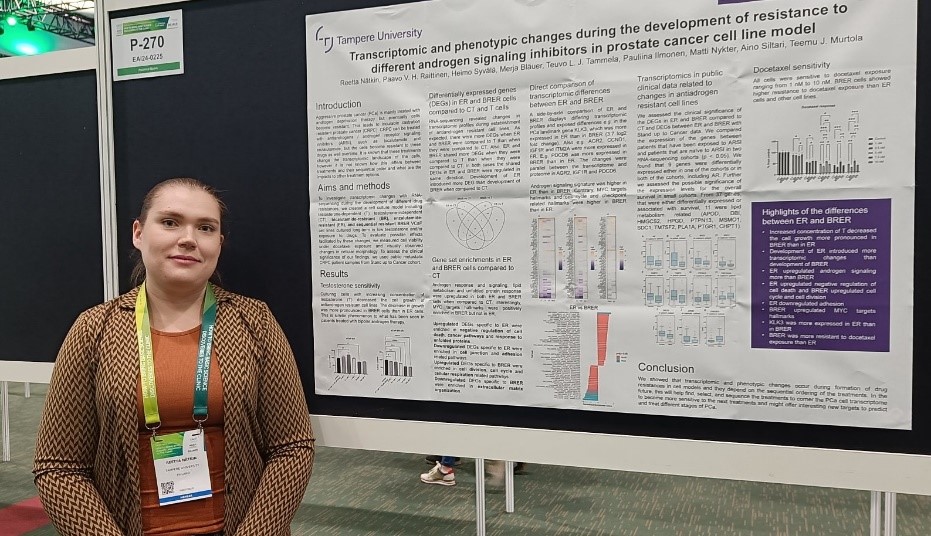
Biology research group and collaborates with Teemu Murtola’s research group
doing RNA-sequencing data analysis. Photo: Teemu Murtola
Want to learn more about the Finnish Center of Excellence in Tumor Genetics?
Subscribe to the blog and keep up to date with the latest posts for a peek into the everyday life in cancer research. You can also follow us on Instagram (@tumorgenetics) and Twitter/X! (@CoEinTG)
 Tumor Genetics Blog
One thought on “On Our Way to Understanding the Treatment Resistance of Prostate Cancer”
Comments are closed.