
By: Anssi Nurminen
The ability of bacteria and cells to multiply by creating copies of themselves using only the energy and materials available in their immediate environment is the single most important factor in how life exists on Earth. A recent example of the mind-bending power of multiplication and exponential growth has been witnessed by the residents near Lough Neagh, the largest freshwater lake in the UK and Ireland. A toxic blue-green algae has covered parts of the lake completely with a biomass having the consistency of mashed potatoes. The recent algae blooms have been attributed to rising temperatures, agricultural runoff and inadequate sewage treatment, all of which have flooded the Lough with nutrients. While it’s hard to imagine the number of times the algae must have divided to fill an entire lake, thinking about the sheer volume or mass consisting of individual cells of this single cell organism can give us an inkling of the raw power of exponential growth. The conditions of the Lough for algae are not dissimilar to the environment for cells inside our bodies. There is plenty of warmth and nutrients to go around to facilitate exponential growth if the various safeguards to keep it from happening can be disabled or circumvented.
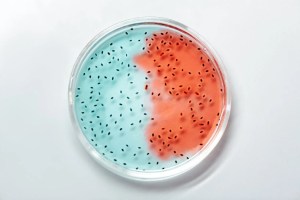
When the awesome power of multiplication by division backfires, it creates unintended consequences in multicellular organisms. We all understand what malignant cancer is at its most basic level. The body’s own cells growing and dividing uncontrollably, spreading to various tissues and organs, finally disrupting the hosting organ’s vital function with fatal consequences. All that is really needed to trigger the process, is a single cell in the 30 to 40 trillion nucleated cells in your body to go rogue, refuse to fall in line, setting off a runaway cascade of uncontrollable growth.
This is not an exaggeration; we can often trace the ancestral lineage of a tumor and its metastases to a single progenitor cell. Personally, I try not to think about it too much, but at the same time enough to feel a sense that our bodies are not going to last forever.
The cells that make up our bodies are often anthropomorphised, in the way that we discuss their actions or responses as if it were something the cell chose to do. A more apt way of thinking about cells is as biological machines or automatons that execute the instructions programmed into their “source code” by evolution. The source code of our cells is, of course, written in the DNA, stored in the 23 pairs of chromatids inside the nucleus of every living cell (few exceptions apply). Unlike with mechanical machines or computers, the execution of the stored instructions in the cells is much less straight forward, involving a statistical probability for each command to be executed.
A strict prerequisite of exponential growth is the ability to pass on the set of instructions to all descendant cells, and DNA is the only permanent storage system available for this purpose. This is why studying the DNA of the cancers cells is the key to understanding their aberrant behavior. There are multiple other ways to diagnose and categorize cancers (e.g., looking at the cells under a microscope), but they are all secondary observations and a consequence of the changes in the tumor DNA.
At the DNA-level, there are two basic types of genes that promote tumorigenesis: oncogenes and tumor suppressors. Typically, oncogenes that drive cell growth and division, elongate cell survival and promote ignoring signals from the cells immediate microenvironment are amplified. Tumor suppressors, the safeguard genes, are either deleted or made inactive by mutations in their assembly instructions. A cell does not instantly become cancerous with a single mistake, but by an accumulation of smaller and larger mistakes and aberrations in its source code during years or decades of life, spanning multiple generations of the cell’s lineage. It is important to note that the large majority of mistakes that happen in cells simply make them less fit and less viable. Over long time periods, some of the randomly occurring mistakes during the copying and maintenance of the DNA happen to hit such precise locations that they promote tumorigenesis. Predisposing risks for certain types of cancer that may run in a family simply take the number of such required mistakes a notch or two lower. By sequencing the DNA of a malignant tumor, it is even possible to trace back in time the order in which the oncogenic, tumor driving events occurred.
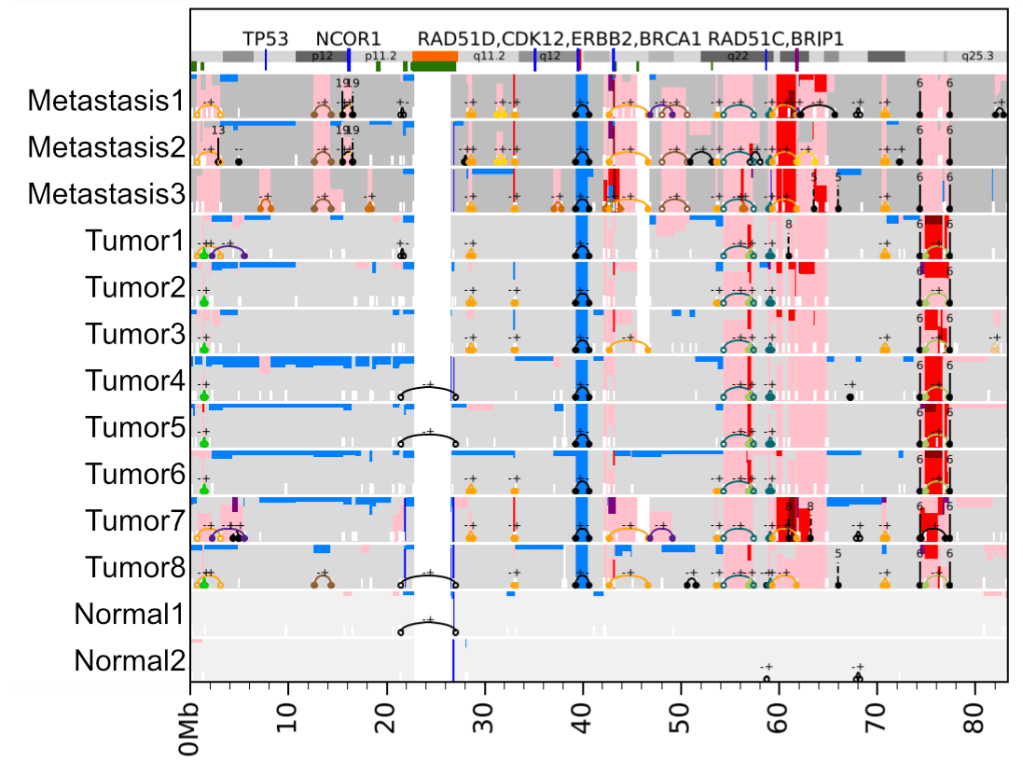
With current DNA sequencing methods and technologies, we have an abundance of detailed information available on what is happening in the cancerous cells of a patient, and we have enough knowledge to understand the broad strokes of why it is happening. Still, the revolution in personalized cancer treatments is waiting to happen. Historically, once the scientific hive mind on Earth has learned how something works, or more importantly, why something goes wrong, it does not take long before a solution is found. Generally speaking, we have recently arrived at this stepping stone of understanding in the field of cancer research. However, in the case of cancer, we are going up against two of the greatest assets of biological systems – adaptability and multiplication by division.

One of the lessons I have learned about biological systems is that nothing ever works or happens 100% of the time. Being able to get rid of the cancer completely becomes a numbers game. Even in cases where there is an effective drug available that is able to target a specific way the patient’s cancer cells are circumventing their growth-inhibiting safeguards, the drug won’t kill all of the cells when they are too many in numbers.
When dealing with a tumor that has reached a metastatic stage, each cancer cell represents a new lottery ticket for the cancer to win the battle. Depending on how early the cancer is caught, it might have millions or even billions of tickets purchased. Cancer cells that are able to survive, even barely, start developing a resistance to the drug through the same mechanisms that have helped life to adapt to new conditions and environments since the dawn of life. Once cancer has emerged, there are two main ways fight the numbers game. Firstly, discovering new drug molecules or repurposing existing ones that are effective and can be given in combination with other drugs. Developing a resistance to two different drugs at the same time is significantly less likely to succeed. Just like it would be for the same person to win two different lotteries in the same week. Secondly, the numbers game can be won before the numbers get too high. Because effective new treatments and drugs are so difficult to come by, early and reliable detection of cancer before it reaches metastatic potential is still, and will remain our best option for winning the numbers game far into the foreseeable future.
Blog credit: Anssi Nurminen , Postdoctoral Researcher in the Nykter group.
Want to learn more about the Finnish Center of Excellence in Tumor Genetics?
Keep up to date with the latest tweets, videos and blog posts for a peek into the everyday
life in cancer research; subscribe to our blog and YouTube channel!
and don’t forget to follow us Twitter (@CoEinTG)
 Tumor Genetics Blog